
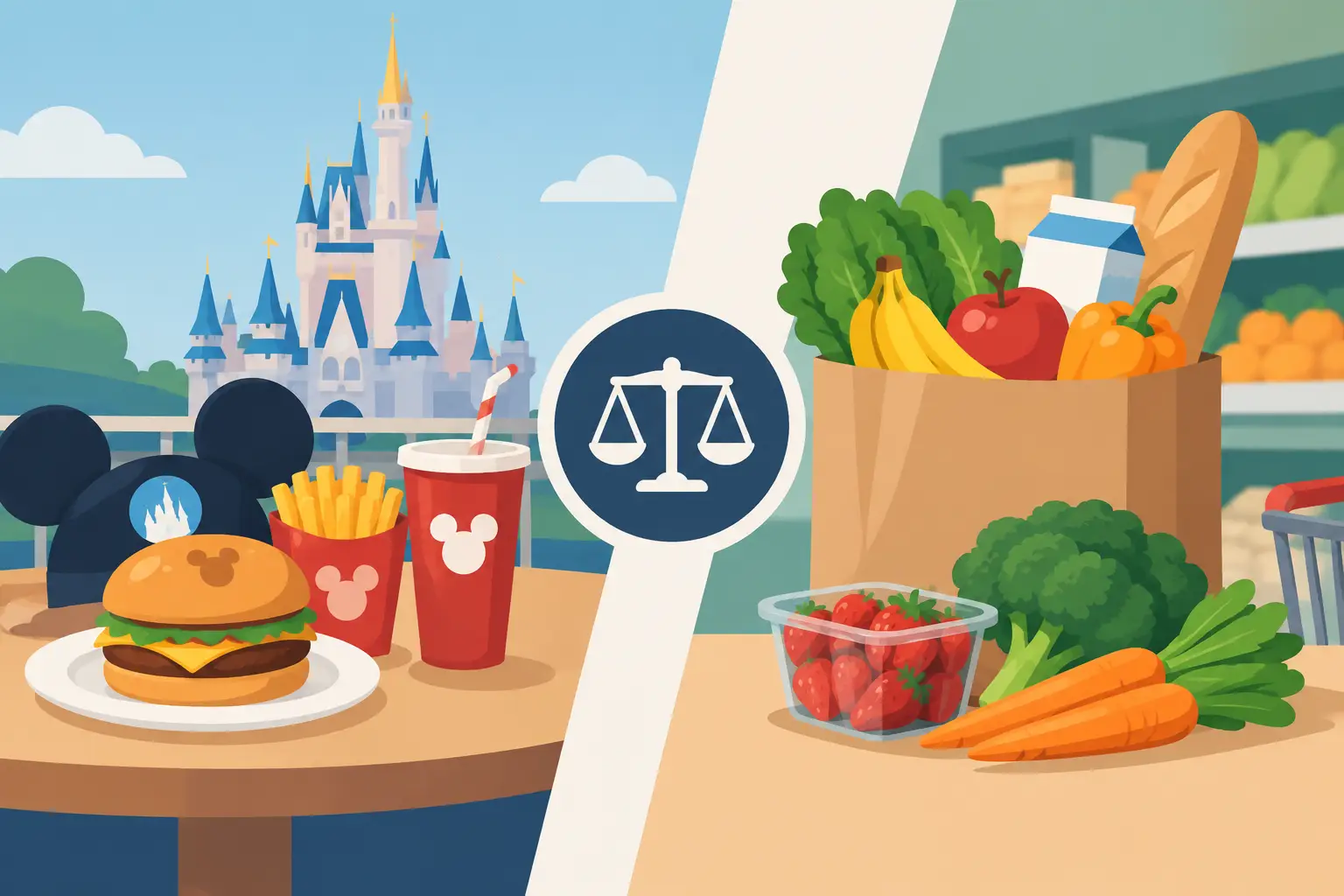
A Disney dining plan versus groceries decision can change your vacation budget by hundreds of dollars, but the cheaper choice is not always the better trip choice. The right answer depends on where you are staying, how often you expect to eat in the parks, whether your family will use table-service meals, and how much vacation time you want to spend thinking about food.
For many Disney resort guests, groceries are the clear value play. For others, a dining plan turns a high-spend food vacation into a more predictable, less stressful experience. The mistake is treating either option as an automatic win.
Start With the Real Question: Convenience or Flexibility?
The Disney Dining Plan is a prepaid package add-on available to eligible Disney resort guests booking a qualifying vacation package. It provides a set number of meal and snack credits, typically based on the number of nights in your stay. Credits can be used across participating Disney restaurants, food courts, snack locations, and some other dining venues.
Groceries work differently. You place an order for delivery or shop after arrival, then use your resort refrigerator, kitchenette, or full kitchen to cover breakfasts, snacks, drinks, and possibly simple meals. This approach gives you control over what you buy and how much you spend, but it requires planning and some in-room organization.
The key distinction is simple: a dining plan pays for Disney food experiences in advance, while groceries reduce the number of Disney food purchases you need to make. One is primarily about convenience and meal access. The other is primarily about flexibility and cost control.
When the Disney Dining Plan Can Be Worth It
A dining plan is most compelling when you already plan to eat the kind of meals that make its credits valuable. Families who want character dining, themed table-service restaurants, or reliable daily quick-service meals can get meaningful value from prepaying, especially when they would otherwise buy those same meals out of pocket.
It also helps travelers who prefer a fixed vacation budget. Food spending at Disney adds up quickly once you include entrées, kids' meals, snacks, drinks, and restaurant tips. Prepaying eligible meals can make the total trip cost easier to manage before departure. You will still need to budget for gratuities at table-service restaurants, alcohol if desired, and any food not covered by your plan, but the largest portion of your Disney dining spend is already accounted for.
The plan can be particularly useful for a first Disney trip. New visitors often underestimate how tiring park days can be. Knowing that lunch and dinner credits are available can reduce in-the-moment debate when everyone is hot, hungry, and standing near a quick-service restaurant at 1 p.m.
There is also an opportunity-value factor. A family using credits for higher-priced entrées, substantial quick-service meals, and eligible snacks may come out close to even or ahead compared with paying separately. That is especially true if they would choose those items regardless of whether a plan existed.
The dining plan works best for these travelers
It is usually a better fit for guests staying at a Disney resort for several nights, spending most days in Disney parks, and planning at least a few higher-cost meals. It also suits families who value predictable spending more than finding the lowest possible food total.
It is less compelling for light eaters, adults who split meals, guests with short Disney stays, and travelers who expect to leave Disney property frequently. If a large part of your itinerary includes Universal Orlando, outlet shopping, International Drive, or a Port Canaveral cruise, you may not have enough Disney dining occasions to use the credits efficiently.
When Groceries Save More Money
Groceries almost always win on pure food cost when you use them strategically. A few breakfasts in the room, refillable water bottles, packaged snacks, fruit, and drinks can replace some of the most marked-up purchases of a theme park vacation.
The biggest savings usually come from breakfast. Buying cereal, bagels, yogurt, fruit, coffee supplies, or protein bars for the room can keep a family from spending a restaurant-level amount before reaching the park. This also gets everyone moving earlier, which matters on days when you want to arrive before the busiest part of the morning.
Snacks and beverages are the second major savings category. Bringing granola bars, crackers, applesauce pouches, trail mix, and sports drinks prevents repeated small purchases that can quietly inflate the daily budget. You can still enjoy a signature Disney snack without buying every hunger fix inside the park.
Groceries are especially effective when your room setup supports them. Disney Vacation Club villas and other accommodations with full kitchens make simple meals realistic. Standard hotel rooms with a mini refrigerator are better for breakfast basics, cold drinks, and snacks than for cooking dinner. Before building a grocery-heavy plan, confirm what your specific room actually includes. A refrigerator, microwave, and coffee maker are not the same as a usable kitchen.
Groceries work best for these travelers
This route is strongest for budget-conscious families, longer stays, guests with dietary preferences, early park mornings, and anyone splitting time between Disney and other Orlando attractions. It is also practical for families with young children who need familiar foods available at odd hours.
Groceries are not automatically friction-free. Delivery windows, resort bell services, refrigeration space, and food waste all matter. Ordering too much for a four-night stay is not savings. Nor is buying ingredients for full dinners if everyone ends up choosing park food after a long day.
Disney Dining Plan Versus Groceries: Compare the Full Cost
Do not compare the cost of a dining plan only against the most expensive meals on the menu. Compare it against what your family would realistically buy without the plan.
Start by mapping a typical day. Maybe your family would have breakfast in the room, a quick-service lunch in the park, one snack each in the afternoon, and dinner at a table-service restaurant every other night. Then price that pattern honestly, including the adults and children in your party. If the dining plan pushes you toward more food or more expensive restaurants than you would otherwise choose, it may not be a financial win even if you use every credit.
Also consider the value of unused credits. On a packed departure day, families often discover they have snack credits left and scramble to spend them on packaged treats. Those credits are not wasted if you buy items you will actually use, but they are not a bargain if you purchase things solely because they are available.
A practical middle ground is often best: use groceries for breakfast, drinks, and portable snacks, then pay out of pocket for the Disney meals you genuinely want. This preserves flexibility while keeping food costs under control. It is often the strongest strategy for travelers who want one or two memorable meals without committing every vacation day to the dining plan structure.
Match Your Food Strategy to Your Resort and Itinerary
Your hotel choice should influence your answer. At a value resort, where room space and food storage are limited, a small grocery order is usually more practical than a full meal-prep plan. Focus on breakfast items, snacks, and drinks.
At a villa-style resort with a kitchen and dining area, groceries can support a much larger share of your meals. A relaxed breakfast, a pool-day lunch, or an easy dinner after a late park return may be worth more than another reservation.
Your park schedule matters just as much. Families with nonstop Disney days may find the dining plan easier to use. Travelers taking resort days, visiting other Orlando parks, or adding a cruise should avoid locking too much of their food budget into Disney-only credits. The more varied your itinerary, the more valuable grocery flexibility becomes.
A Smarter Way to Decide Before You Book
Choose the Disney Dining Plan if you want prepaid convenience, expect to eat mostly at Disney, and would naturally order enough qualifying meals to justify it. Choose groceries if lowering your food total is the priority, you have room to store food, or your family is comfortable with simple breakfasts and snacks.
For many Orlando vacations, the best answer is not either-or. Buy a modest grocery order that covers the meals Disney is least likely to make memorable, then spend intentionally on the dining experiences your family will remember. That approach protects your budget without turning a Disney trip into a spreadsheet exercise.