
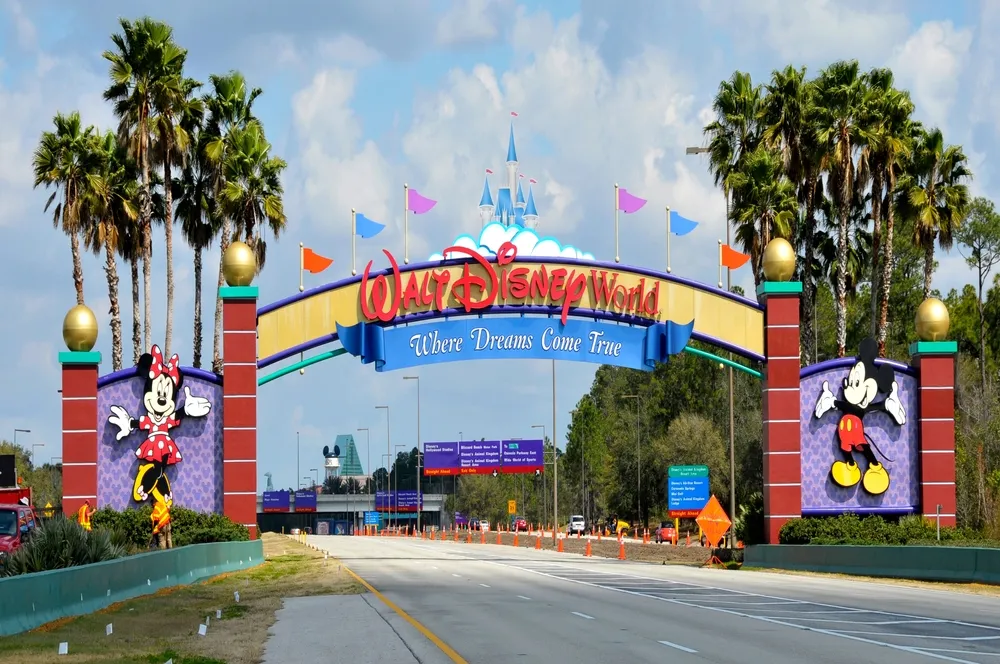
Is Walt Disney World right for your trip?
Walt Disney World is not one park — it is a 40-square-mile resort with four theme parks, two water parks, ~25 hotels and the Disney Springs district. That scale is the single thing first-timers underestimate. It rewards visitors who plan: families with children, multi-generational groups and anyone happy to pre-book and pace themselves. It is a poor fit for a one- or two-day "see it all" trip, or for travellers who dislike crowds, scheduling and queuing — Universal or a smaller park may suit them better. Budget realistically: tickets, a hotel and food for a family of four across several days is a major-vacation expense, not a weekend.
The four parks, and which to prioritise
Each park has its own in-depth guide — Magic Kingdom, EPCOT, Hollywood Studios and Animal Kingdom — but here is how they compare at a glance:
- Magic Kingdom — the iconic castle park and the best for younger children; most rides and the highest crowds. Headliners: Seven Dwarfs Mine Train, Space Mountain, TRON Lightcycle / Run, Pirates, Haunted Mansion. Usually needs a full, early day.
- EPCOT — two halves: future/tech (Guardians of the Galaxy: Cosmic Rewind, Test Track) and World Showcase, eleven country pavilions built around dining and seasonal festivals. Best for adults and foodies; lighter on rides.
- Disney's Hollywood Studios — the most ride-dense and demand-heavy park: Star Wars: Galaxy's Edge (Rise of the Resistance) and Toy Story Land. Compact, so it feels busy; rope-drop it.
- Disney's Animal Kingdom — a zoo–theme-park hybrid: Pandora (Flight of Passage), Expedition Everest, Kilimanjaro Safaris. Do animal experiences in the cooler morning.
If you only have limited days, prioritise Magic Kingdom first, then Hollywood Studios for the headliner rides.
A realistic day at each park
Magic Kingdom is a full, long day — rope-drop Fantasyland or Tomorrowland, take a midday break (it is the easiest park to leave and return to by monorail/boat), and stay for the night-time spectacular. EPCOT is a two-speed day: rides and Future World in the morning, then a slow afternoon and evening eating and drinking around World Showcase — it is the best park for an evening, not an early start. Hollywood Studios is intense and compact; commit to a hard rope drop and you can clear the headliners by early afternoon. Animal Kingdom front-loads its value — animals are active and tours run best in the cool morning, and it traditionally closes earlier, so treat it as a strong half-to-three-quarter day.
How many days, and how to split them
Plan roughly one full day per park, so a complete first visit is usually four to five park days with a rest or Disney Springs day worked in. Quick framework:
- 2 days: Magic Kingdom + Hollywood Studios.
- 3 days: add EPCOT.
- 4 days: all four parks, one each.
- 5+ days: all four, plus a repeat day at your favourite and a water park or rest day.
Add the Park Hopper option only if you specifically want EPCOT evenings or to re-ride favourites — for a first trip, one park per day is usually calmer and better value.
Tickets without overpaying
Disney uses date-based pricing: the price depends on the dates you choose and the per-day cost drops the more consecutive days you buy. The cost levers you actually control:
- Trip length & park-day count — fewer ticketed park days is the biggest saving; pad the trip with non-park days instead of more tickets.
- Season — the same ticket is far cheaper in off-peak windows.
- Park Hopper / extras — real add-on costs; skip what you will not use.
Buy direct from Disney or a reputable authorised reseller — never an unofficial resale or "discount" partial-ticket site. For most standard tickets a separate park reservation is no longer required, but Disney changes this periodically, so confirm before you go. See the tickets guide for the wider picture.
Lightning Lane: is paid line-skipping worth it?
Disney's paid skip-the-line system (currently Lightning Lane Multi Pass and Single Pass; formerly Genie+ / Individual Lightning Lane) costs extra on top of your ticket. Decision guide: it is usually worth it on busy days at ride-heavy parks (Hollywood Studios, Magic Kingdom) and for groups who cannot rope-drop. It is often skippable on quieter days, at EPCOT/Animal Kingdom, or if you reliably arrive at opening. The product and pricing change frequently — treat any specific walkthrough as a starting point and verify the current rules before purchase.
The single best free strategy: rope drop
Arriving before official opening (\"rope drop\") is the most valuable free tactic at Walt Disney World. In the first hour you can often do two or three headliners with waits you would otherwise pay Lightning Lane for. Practical plan: be at the tapstiles 30–45 minutes early, go straight to the highest-demand ride, then work outward; take a long midday break during peak heat and crowds; return for the evening. Use the official app for wait times, mobile food ordering and (where offered) virtual queues.
Dining: reservations, mobile order and the Dining Plan
Disney dining splits into three tiers: quick-service (counter food — use mobile order in the app to skip the queue), table-service (sit-down, almost always needs an advance reservation — popular character meals and signature restaurants book out far ahead), and snack carts. Reservations open a fixed window before arrival; if a must-do meal matters to your group, booking on the day the window opens is effectively required. The optional Disney Dining Plan only saves money for big eaters who would order dessert and the priciest items anyway — for most families, paying as you go and eating one main meal off-property is cheaper. Reasonable outside snacks and a refillable water bottle are allowed and cut costs noticeably.
Where to stay: on-site vs off-site
On-property perks that genuinely matter: Early Theme Park Entry every day (30 minutes before the public — significant), Disney transport, and Extended Evening Hours at Deluxe resorts. Tiers run Value, Moderate, Deluxe and Deluxe Villa. Choose on-site if maximising park time and convenience matters most; choose off-site (often cheaper and roomier, especially vacation homes for larger groups) if budget and space win. We compare both in the Orlando hotels & resorts guide.
Getting there and getting around
From Orlando International Airport (MCO) it is about 30–45 minutes; see the airport guide and bus services for transfers (rideshare, shuttle or car). On property Disney runs free buses, the monorail, the Skyliner gondola and boats. Internal transport is free but not always fast — allow 60–90 minutes door-to-park for early starts, and a car can still be quicker for off-site stays or non-Disney plans.
Accessibility, services and the app
Disney is among the most accessible destinations of its kind: most queues and attractions accommodate wheelchairs and ECVs (rentable on-site, but bring or reserve one for mobility needs), and a Disability Access Service (DAS) exists for guests who cannot tolerate conventional queues — its rules and registration process change, so check the current policy ahead of time rather than at the gate. Rider Switch lets a party split so adults take turns on height-restricted rides without re-queuing. The official My Disney Experience app is effectively mandatory now — park maps, wait times, mobile food order, Lightning Lane and virtual queues all run through it, so install it, log in and learn it before you arrive.
Seasonal events worth planning around
Disney layers hard-ticket and festival events onto the calendar that can be the highlight — or the reason a park is unexpectedly busy or closes early to day guests. EPCOT runs a near-continuous cycle of seasonal festivals (food & wine, festival of the arts, flower & garden, holidays) that transform the park for adults and foodies. Magic Kingdom sells separately ticketed seasonal evening parties around Halloween and Christmas. These are genuinely special but change yearly — check what is on during your dates, and note that a separately ticketed party night means the park may close early to standard tickets.
Best and worst times to go
Crowds track the US school calendar. Busiest/most expensive: Christmas–New Year, spring break, Easter, Thanksgiving and mid-June to mid-August. Lower crowds and prices: late January to early February, parts of late April to mid-May, and late August into September/early October. Trade-offs in the quieter windows: shorter hours, possible ride or water-park refurbishments, and summer heat/afternoon storms — pack flexibility and a midday-break plan. The best time to visit guide breaks this down by month.
Travelling with young kids vs teens and adults
With young children: lean Magic Kingdom, use Rider Switch so adults take turns on big rides without re-queuing, check height requirements before you build the day, and protect a real midday rest. With teens/adults: prioritise Hollywood Studios and EPCOT, consider Park Hopper for EPCOT evenings, and weight Lightning Lane toward the thrill headliners. Mixed groups: split up for a few hours rather than forcing one pace on everyone.


