
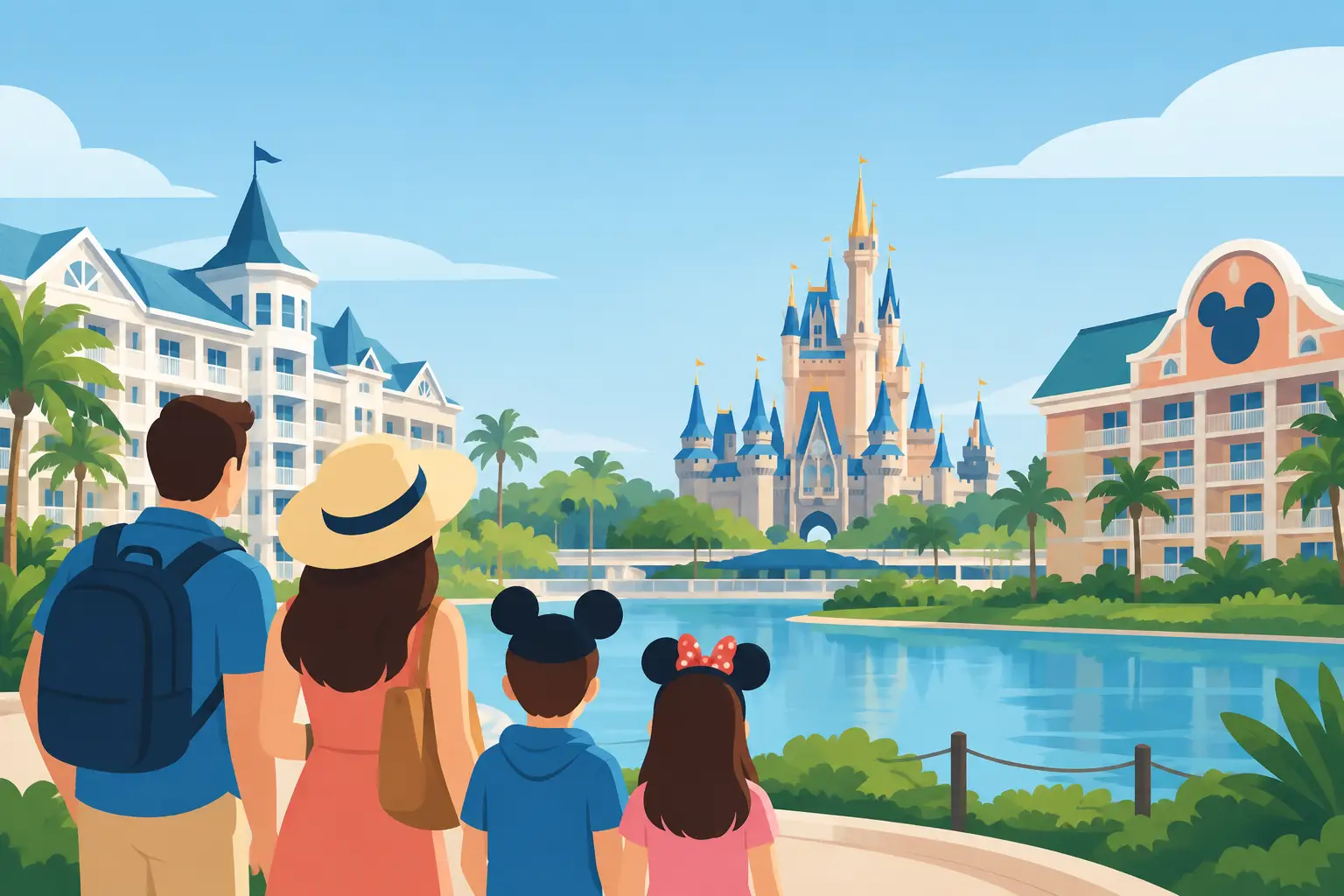
A Disney hotel can make a four-park vacation feel organized or unnecessarily expensive. The best Disney resorts are not simply the ones with the biggest pools, newest rooms, or strongest theme. They are the ones that reduce friction for your specific travel party while keeping enough of your budget available for tickets, dining, and the extras that matter to you.
For most travelers, the decision comes down to four practical questions: how much time you will spend at the hotel, which parks you plan to visit most, how many people need to sleep in the room, and whether paying more will genuinely save time. Start there, not with a resort ranking.
What You Get by Staying at Disney Resorts
The main value of staying on Disney property is convenience, not necessarily luxury. Guests have access to Disney transportation, early theme park entry on eligible days, resort package delivery options where available, and the ability to return to the hotel without dealing with parking lots or a rental car after a long park day.
That convenience has different value depending on your itinerary. A family with young children may use the midday break every day, making a nearby resort and easy transportation worth a meaningful premium. Two adults spending open-to-close days in the parks may get less value from a deluxe room and be better served by a lower-cost option with reliable bus access.
Disney transportation is included, but it is not identical from resort to resort. Monorail, Skyliner, boat, and walking access can save time and reduce stroller hassles. Bus service is broad and useful, but it can involve waits, shared routes, and standing room at peak periods. Paying for a better location is most defensible when it improves the transportation to the parks you will actually visit.
Choose a Disney Resort by Travel Style
Value resorts: best when park time matters most
Disney's value resorts are designed for travelers who want the benefits of staying on property without committing a large share of the trip budget to the hotel. Expect large themed icons, food courts rather than table-service restaurants, active pool areas, exterior room corridors at many properties, and smaller rooms than higher tiers.
They work especially well for first-time families who plan full park days, couples prioritizing tickets and dining, and travelers extending an Orlando stay with Universal, SeaWorld, or a Port Canaveral cruise. Disney's Art of Animation and Pop Century have an advantage for many guests because Skyliner service connects them to EPCOT and Disney's Hollywood Studios. That can be a bigger practical benefit than upgraded finishes in a room.
The trade-off is space and atmosphere. Standard value rooms can feel tight with two adults and two growing children, particularly if a stroller, park bags, and souvenirs are part of the equation. If your family needs room to decompress, a value resort is not automatically the best bargain.
Moderate resorts: best for more space and a calmer pace
Moderate resorts sit between value and deluxe pricing, but their appeal is not always obvious from the nightly rate. They generally offer more landscaped grounds, a quieter overall feel, stronger pool areas, and room configurations that can better suit families. Some also offer amenities such as table-service dining or lounges that make a non-park evening easier.
Disney's Caribbean Beach Resort is a practical choice for guests who want Skyliner access but need a more traditional resort setting than a value hotel. Disney's Port Orleans Resort - Riverside and French Quarter are often better fits for travelers who value a relaxed atmosphere and boat transportation to Disney Springs. Coronado Springs can appeal to adults, convention travelers, and families who want more dining choices, though its large footprint means internal walking distances deserve attention.
Moderates make the most sense when the hotel itself is part of the vacation. If you expect to spend every night in the parks, the price step-up may not return much value. If you plan pool afternoons, rest days, or leisurely dinners, it often can.
Deluxe resorts: best for location and hotel time
Deluxe resorts command higher prices because of location, larger rooms, dining, recreation, and access to the most useful transportation options. The strongest reason to book one is usually proximity, not the category label.
The monorail resorts - Disney's Contemporary Resort, Grand Floridian, and Polynesian Village Resort - are ideal for Magic Kingdom-focused trips. Being able to walk or take a short monorail ride back for naps can change the rhythm of a vacation with preschoolers. They also work well for multigenerational groups who want fewer transportation variables.
Disney's BoardWalk-area resorts offer walking or boat access to EPCOT and Hollywood Studios. They are a smart fit for adults, food-focused visitors, and families with older children who will spend substantial time in those two parks. Animal Kingdom Lodge offers one of the most distinctive hotel experiences, but it is farther from most parks and depends on bus transportation. Choose it for the setting and dining, not for commute efficiency.
A deluxe stay is difficult to justify solely because it feels special. It becomes easier to justify when you are purchasing time back, using the amenities, or splitting a larger room cost across several travelers.
Room Size Can Change the Entire Decision
Many Disney resort decisions fail because travelers compare nightly rates without comparing sleep arrangements. A lower-priced room is not a bargain if everyone sleeps poorly for a week.
Before booking, confirm the exact bed setup, occupancy limit, bathroom layout, refrigerator availability, and whether the room has a queen bed, Murphy bed, pull-down bed, or sofa bed. Photos can be misleading, and room categories within the same resort can differ substantially.
For a family of five, Disney's family suites, certain moderate rooms, deluxe studios, villas, or two-room solutions may be more realistic than trying to fit everyone into one standard room. For a couple, a standard room in a convenient location often provides better value than a large villa with kitchen facilities you will barely use.
A split stay can also work, but only if the benefit is meaningful. Moving from a value resort to a deluxe resort for two nights near the end of a trip can create a memorable finish and improve access to specific parks. It also costs time, requires repacking, and can complicate grocery deliveries or dining plans. Do not move hotels just to sample a new theme.
Transportation Should Influence Your Shortlist
Transportation is where resort brochures and real vacation logistics often part ways. A hotel may look close on a map while still requiring a bus ride, a transfer, or a long walk to the nearest station.
Use your likely park schedule to narrow the options. If Magic Kingdom is your priority, monorail or walking access has outsized value. If EPCOT and Hollywood Studios lead the itinerary, Skyliner or BoardWalk access can be more useful. If Animal Kingdom is your favorite park, no Disney resort offers direct rail, monorail, or Skyliner access, so choose based on budget and overall hotel fit rather than trying to optimize a route that does not exist.
Also consider arrival and departure days. Guests flying into Orlando International Airport need to arrange their own airport transportation. Disney's former complimentary airport transfer service is no longer operating, so account for a rental car, rideshare, private transfer, or shuttle before deciding that a car-free stay is completely friction-free.
When Staying Off Property Is the Smarter Move
Disney resorts are not the default best choice for every Orlando vacation. Off-property hotels can provide substantially more space, free breakfast, full kitchens, lower nightly costs, and easier access to Universal Orlando or International Drive. For a larger family, a nearby suite hotel or vacation rental may create savings that outweigh Disney transportation and early entry.
This is especially true for trips combining Disney with several non-Disney days, or for travelers who already plan to rent a car. Once you are driving daily, the transportation advantage of staying on Disney property becomes less decisive. You will need to factor in theme park parking costs for non-resort guests, but the total may still favor an off-site hotel.
The strongest case for Disney property is a Disney-heavy trip where convenience is part of the product. The strongest case for off property is a longer Orlando vacation where room size, kitchen access, and a lower total lodging cost matter more than being inside the Disney bubble.
A Simple Way to Make the Final Choice
Shortlist no more than three resorts, then compare the total stay cost rather than the advertised nightly rate. Include parking if applicable, airport transportation, breakfast or grocery needs, likely rideshare costs, and whether a larger room would prevent booking a second room.
Then assign value to the time you are buying back. A resort that saves 30 to 45 minutes of transportation on several park days may be worth more than a cheaper option that creates daily stress. But if the premium only buys a fancier lobby while your group will be in the parks from morning to night, put that money toward experiences you will remember.
The right hotel should make your Orlando plan easier to operate. Pick the Disney resort that fits your actual park schedule, sleeping needs, and budget pressure points, then book it with confidence and move on to the decisions that shape the rest of the trip.