
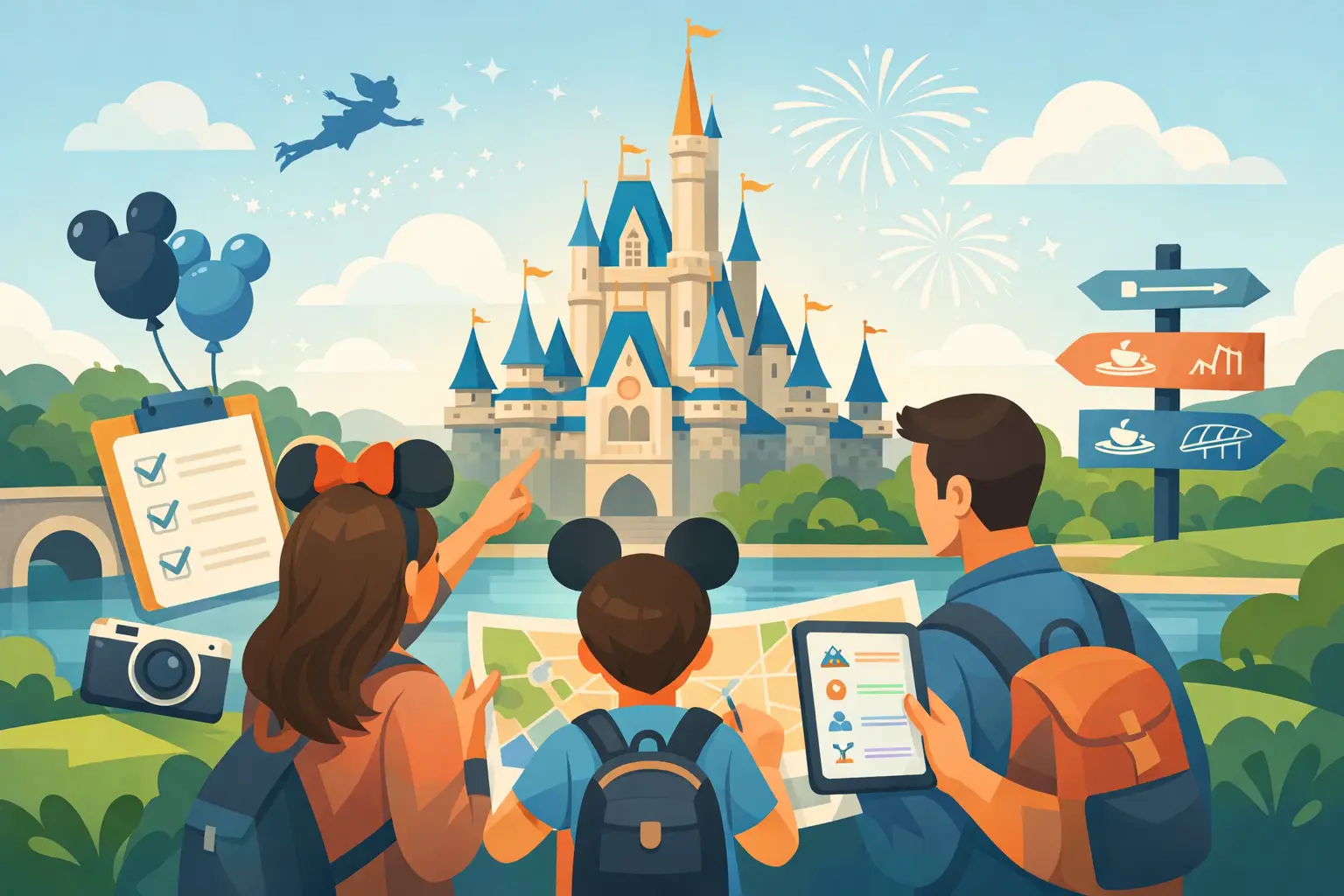
If you show up to Magic Kingdom without a plan, the park can turn one expensive day into a string of long waits, rushed meals, and missed headliners. A good magic kingdom planning guide is less about squeezing in every ride and more about making smart choices before you walk through the gates.
Magic Kingdom rewards preparation because its friction points are predictable. Entry takes time, the most popular rides build long lines early, mobile food ordering can back up at peak meal hours, and nighttime entertainment shifts crowd patterns in ways that catch first-time visitors off guard. The upside is that a few well-timed decisions can make the day feel much easier.
How to use this magic kingdom planning guide
Start with one simple question: what kind of day are you trying to have? Families with young kids, adults chasing classics, and visitors trying to cover the park in one day should not use the same strategy. The biggest planning mistake is copying a touring plan that does not match your group’s pace, budget, or priorities.
If this is your only Magic Kingdom day, focus on coverage and ride timing. If you have small children, build around Fantasyland, character meets, and a midday reset. If you are adding Magic Kingdom to a longer Orlando trip, treat it as one piece of the vacation instead of forcing every attraction into a single schedule.
Pick the right day and set realistic expectations
Not all park days feel the same. Holiday weeks, school breaks, and weekends usually bring heavier crowds, but crowd level is only part of the equation. A longer operating day can actually help if you are willing to stay late, while a shorter day can feel more crowded because everyone is compressed into fewer hours.
For most first-time visitors, the best approach is to choose a day when you can arrive before park opening and stay at least into the evening. That gives you access to the two most useful windows in the park: the first two hours, when waits are often most manageable, and the late evening, when many families with younger children start to leave.
You should also be realistic about what one day can cover. On a busy day, expecting every major ride, a full sit-down meal, multiple character stops, a parade, fireworks, and lots of shopping is usually where the plan breaks down. Pick your non-negotiables early.
Tickets, entry timing, and why arrival matters more than most people think
Many travelers spend weeks comparing ticket options and then lose an hour on the morning of the visit because they arrive too late. At Magic Kingdom, transportation and entry can take longer than expected, especially if you are driving and using the Transportation and Ticket Center rather than going directly from a Disney resort area transportation option.
The practical target is to be at the security and tap-in area well before official opening, not pulling into the parking lot at opening time. That difference matters. Early entry into the park area gives you a head start on your first attraction and often saves more time than any other single tactic during the day.
If your budget is tight, put your effort into timing rather than adding every paid extra. Strong early arrival, a clear ride order, and smart meal timing can still produce a very good day.
Build your morning around high-wait attractions
Morning is when you make the day easier or harder. The best use of your first hours is the rides that routinely build the longest waits by late morning and early afternoon. Which ones matter most depends on your group.
For many visitors, Seven Dwarfs Mine Train, Peter Pan’s Flight, Space Mountain, Jungle Cruise, and Princess Fairytale Hall are the main pressure points. Families with young children may care more about Peter Pan, Winnie the Pooh, Dumbo, and character experiences. Thrill-focused adults may put Space Mountain, Big Thunder Mountain Railroad, and TRON at the top.
The key is not simply rushing to the single most popular ride. It is creating a logical first block of attractions in the same area so you are not crossing the park repeatedly. Zigzagging burns time faster than most guests realize.
Fantasyland and Tomorrowland often make a strong early combination for first-timers. Frontierland can work well if your priorities lean toward Big Thunder and nearby attractions. Adventureland becomes more valuable early if Jungle Cruise is high on your list. There is no perfect universal route, which is why planning by party type works better than copying someone else’s exact schedule.
Use the middle of the day differently
From late morning through midafternoon, waits usually rise, pathways get more crowded, and the heat starts to matter. This is where many guests keep pushing ride after ride and end up losing energy by dinner. A better strategy is to shift what you do.
Use this stretch for lower-wait attractions, indoor shows, mobile-order meals, shopping, or a slower lunch. If you are traveling with younger kids, this is also the best time to consider a hotel break if your setup allows it. The trade-off is obvious: leaving the park costs transportation time, but for some families it prevents a full late-day meltdown and makes the evening much more productive.
If you are staying all day, be deliberate about meals. Eat lunch a little early or a little late. Ordering food right at the standard noon rush often means more waiting, less seating, and a more stressful stop than it needs to be.
Dining strategy: keep it useful, not ambitious
Magic Kingdom has plenty of recognizable dining spots, but food strategy should support your day rather than dominate it. For a one-day visit, quick-service meals usually make more sense than a long table-service reservation in the middle of prime touring time.
That does not mean sit-down meals are a bad idea. They can be a smart choice for groups that want air conditioning, a firm break, or a character meal built into the day. But there is a trade-off: a full-service meal can take a significant chunk of your most crowded park hours, and if your ride list is long, that time matters.
Snack planning is underrated. A well-timed snack break in the afternoon can reset kids and adults without committing to a full stop. It also gives you flexibility if dinner needs to happen later, after nighttime crowds start shifting.
Nighttime strategy is where many first visits improve
A lot of first-time visitors treat fireworks as the finish line. In reality, the period before, during, and right after nighttime entertainment is one of the most strategic parts of the day. Crowd movement becomes less evenly distributed, which creates opportunity if you know what matters more to your group.
If fireworks are essential, claim your viewing area with enough time to avoid unnecessary stress, especially with children. If seeing the show from the best possible spot is not important, you can often get more done on attractions while many guests are locked into viewing areas.
After the nighttime show, some families leave immediately and create transportation bottlenecks. Others use that final stretch for one or two more rides. If your group still has energy, this can be one of the best times to pick up attractions that had uncomfortable waits earlier.
Budget choices that actually change the day
There is no single budget version of Magic Kingdom because the right spending depends on where your time pressure is. Some visitors benefit from paid line-skipping tools. Others are better off saving that money and choosing a stronger arrival strategy, bringing refillable water bottles, skipping a table-service meal, or limiting impulse purchases until the end of the night.
The biggest cost driver is often not the ticket itself but the stack of smaller decisions around it - transportation, food, souvenirs, and whether a rushed day pushes you toward extra spending for convenience. Planning ahead reduces those emotional purchases.
This is where an independent planning mindset helps. Orlando Compass focuses on the decisions around the park, not just the park itself, because Magic Kingdom is easier when your hotel, transportation, and overall Orlando schedule are working with you instead of against you.
Common first-timer mistakes to avoid
The most common mistake is arriving late and trying to recover with a more expensive afternoon. The second is overplanning every minute, leaving no room for weather, tired kids, or unexpected line swings. The third is treating every headline attraction as equally important.
You do not need a perfect day. You need a day built around your priorities, with enough flexibility to handle the parts you cannot control. Weather can interrupt plans. Kids may suddenly care more about a carousel than a major coaster. Adults who thought they wanted maximum ride count may realize a calmer pace feels better by 3 p.m. That is normal.
The best Magic Kingdom plan is the one that fits your group well enough to keep the day from unraveling when something shifts.
If you plan around arrival time, your top priorities, and the park’s natural crowd flow, Magic Kingdom becomes much less confusing and much more enjoyable. Make the big decisions before you book, keep the day realistic, and leave yourself enough margin to enjoy the reasons you wanted to go in the first place.