
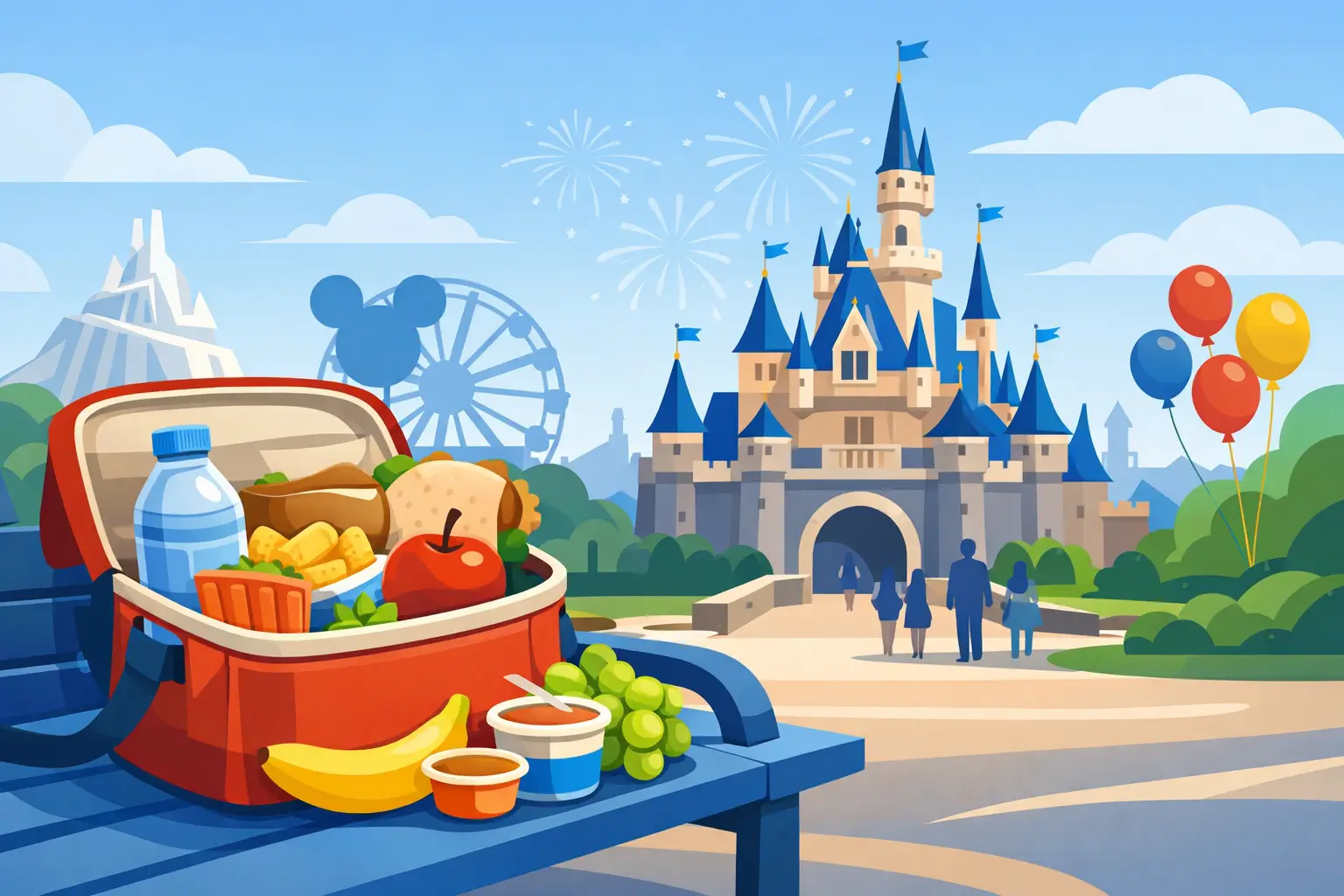
A Disney World lunch for four can easily cost more than a day of parking, especially once drinks, snacks, and a quick-service meal are involved. If you are asking, “can you bring food to Disney?”, the practical answer for Walt Disney World is yes. Bringing your own snacks, sandwiches, and nonalcoholic drinks is one of the simplest ways to control daily spending without giving up valuable park time.
The better question is not whether you can bring food, but what is worth carrying through security and into a long Florida park day. A well-packed bag can save a family $50 to $100 or more per day. An overpacked cooler can become an all-day inconvenience. The right approach depends on your party size, dining plans, hotel location, and how much midday heat you expect to manage.
Can You Bring Food to Disney World?
Disney World generally permits guests to bring outside food and nonalcoholic beverages into its theme parks. That includes practical park-day items such as granola bars, fruit snacks, crackers, sandwiches, trail mix, and refillable water bottles. Parents can also bring food that works for a child’s schedule or dietary needs rather than trying to force every meal around restaurant availability.
There are restrictions. Food should not require heating, reheating, refrigeration, or preparation inside the park, and it should not have a strong odor. Alcohol is not permitted, and glass containers are generally prohibited, with limited exceptions such as small containers for baby food. Loose ice and dry ice are also not allowed. Reusable ice packs are the more practical choice.
Disney security has the final say at the entrance, so pack conservatively and check the current rules before you travel. Policies can change, and a bag that is technically within the rules can still slow your group down if it is difficult to inspect.
This guidance is for Walt Disney World in Orlando. Disneyland Resort has similar outside-food principles but operates separately, so travelers visiting California should confirm that resort’s current rules rather than assuming the policies are identical.
What Food Makes Sense to Pack
The goal is not to recreate your hotel kitchen in Magic Kingdom. It is to cover the expensive, inconvenient parts of the day: breakfast on the move, snack attacks between rides, and one flexible meal when mobile-order windows or restaurant prices do not fit your plan.
For most families, shelf-stable snacks and a compact lunch are the best balance. Think bagels, muffins, peanut butter crackers, protein bars, pretzels, fruit pouches, jerky, and individually wrapped treats. Sandwiches work well if they are packed in an insulated bag with ice packs and eaten by lunchtime. If your group has food allergies, selective eaters, or toddlers, familiar foods are often more valuable than the direct savings.
Drinks deserve just as much attention. Florida heat turns a small hydration problem into a costly one quickly. Bringing reusable water bottles lets you refill throughout the day, while a few sealed drinks can buy time before your first refill stop. Avoid packing so many beverages that your bag becomes heavier than the savings are worth. Water is easy to replace in the parks. A cold bottle of water is useful, but six of them in a backpack can be miserable by midafternoon.
Foods that melt, leak, crush easily, or need constant refrigeration are rarely worth it. Yogurt, elaborate salads, chocolate-heavy snacks, and anything with mayonnaise can become a problem in the heat if you are not using them quickly. The same applies to strong-smelling foods. Even if they are allowed, they are not ideal in crowded queues and indoor shows.
Cooler, Bag, and Ice-Pack Rules to Plan Around
Disney World allows coolers, but size matters. Coolers, bags, and suitcases must generally be no larger than 24 inches long by 15 inches wide by 18 inches high. That is generous enough for a family day bag or a soft-sided cooler, but it is not an invitation to bring a large rolling cooler through the entrance.
A small, soft-sided insulated backpack is usually the smartest option. It keeps hands free for strollers, Lightning Lane entry, photos, and children who suddenly need help at the worst possible moment. It also fits more naturally into ride storage areas and is faster for security to inspect than a hard cooler stuffed with loose items.
Use frozen reusable ice packs rather than loose ice. Pack food in clear zip-top bags or separate containers so security can see what you have quickly. Keep sunscreen, portable chargers, medications, and ponchos easy to reach instead of burying them under lunch. Those small operational choices matter when your group is trying to make an early attraction return time.
When Bringing Food Saves the Most Money
Packing food produces the strongest savings when it replaces purchases your family would otherwise make without much thought. The classic example is breakfast. A hotel room breakfast of bagels, fruit, and coffee before leaving can prevent a $40 to $70 in-park stop that delays rope drop or your first scheduled attraction.
Snacks are the second big win. Disney snacks are part of the experience, and there is no reason to eliminate them entirely. But buying every hungry child a snack and drink two or three times a day adds up fast. Bring ordinary fuel, then spend on one memorable item your group actually wants, whether that is a themed dessert, popcorn, or a specialty drink.
Lunch is more situational. A packed lunch is especially useful at Magic Kingdom and Animal Kingdom, where a sit-down meal can take a meaningful bite out of touring time. At EPCOT, many adults prefer to leave room for festival booths or international food options, so a full packed lunch may be less appealing. At Hollywood Studios, a quick meal can be useful if your day is built around popular attractions and you want to avoid stopping during a busy window.
A good middle ground is to pack enough for one simple meal and still budget for one Disney dining experience per day. That keeps food spending predictable without making the trip feel overly restricted.
The Trade-Off: Savings vs. Carrying It All Day
Bringing food is not automatically the best choice for every traveler. Couples staying at a Disney resort with easy access to food courts may value a lighter bag and more spontaneity. Families driving to Orlando can stock up at a grocery store and gain far more from packing. Guests using rideshare transportation and staying in a standard hotel room may have limited space to store perishables, which makes shelf-stable foods the better plan.
Your park schedule also matters. If you expect to return to your resort for an afternoon break, you do not need to carry an entire day’s food supply. Pack snacks and water, then eat a more substantial meal back at the hotel. If you are committing to open-to-close hours, an insulated lunch becomes much more useful.
Do not overlook the emotional trade-off. A Disney vacation is expensive, and some travelers would rather pay for the convenience and variety of park food than manage another layer of logistics. That is reasonable. The mistake is treating food as an all-or-nothing decision. You can pack breakfast and snacks while still reserving money for the meal your family will remember.
A Smart Disney Food-Packing Plan for Families
For a typical full park day, pack breakfast for the trip to the park, a few snacks per person, refillable water bottles, and one backup lunch or substantial snack. Add reusable ice packs, napkins, and a small trash bag for wrappers. Keep one emergency item that a tired child will reliably eat, even if the rest of the plan falls apart.
If you are using a stroller, place the heavier cooler bag underneath rather than hanging it from the handles, which can make the stroller tip. If you are not using a stroller, reduce your load aggressively. One parent carrying a heavy bag from rope drop through fireworks may decide the savings were not worth it.
Most importantly, build food around your touring plan rather than the other way around. Eat the packed items while waiting for a parade spot, during a quiet break, or when a child needs a reset. Save a restaurant meal for a time when sitting down genuinely improves the day, not simply because everyone is hungry and there is nothing else available.
Bringing food to Disney World is less about cutting every dining cost and more about keeping your day flexible. Pack the basics, spend on the experiences that matter to your group, and let your park plan - not hunger or impulse purchases - set the pace.